Quick Summary
A spring asparagus parmesan frittata is one of the most versatile meals in a cook’s arsenal — gluten-free, endlessly customizable, and equally at home on a brunch table or a Tuesday dinner plate. This RD-approved recipe uses a dozen free-range eggs, fresh asparagus, sweet Vidalia onion, mushrooms, and grated Parmesan in a single cast-iron skillet, finished in the oven. Served alongside a simple balsamic spring green salad, it offers complete protein, folate, choline, and a host of vitamins in a dish that comes together in under 30 minutes.

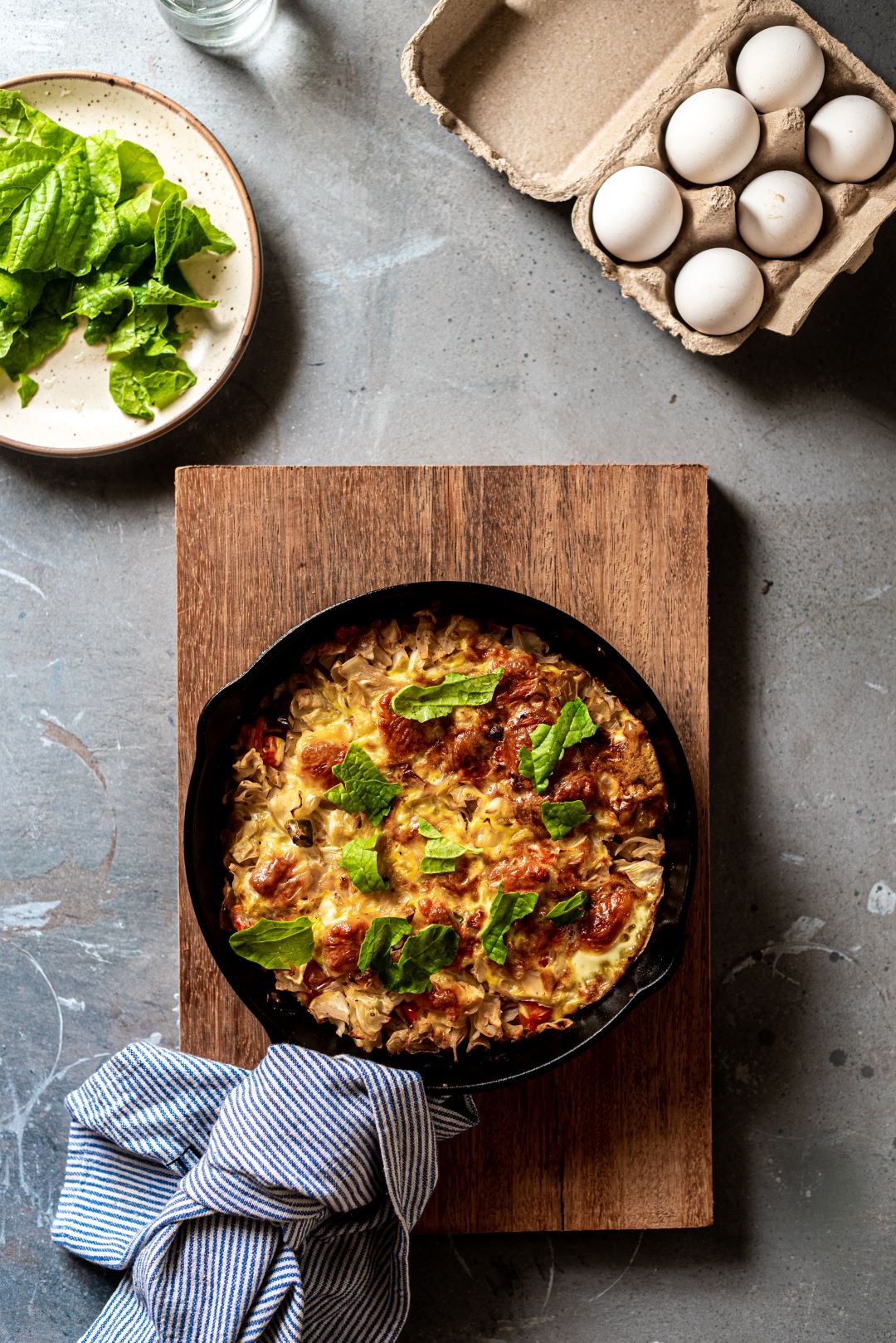
If I had to choose one dish that captures the spirit of spring cooking, fresh, unfussy, and quietly impressive, it would be this asparagus parmesan frittata. It’s the kind of recipe that looks like you spent an hour in the kitchen when you were actually done in 30 minutes. Most of that time is hands-off while the frittata bakes in the oven. The result is a golden-topped, vegetable-packed egg dish that works for breakfast, a light lunch, a weeknight dinner, or a weekend brunch for six.
Asparagus and eggs are a natural pairing. Both peak in spring, both are rich in folate, which is critical during pregnancy and supports cellular health, and both are deeply satisfying. Add mushrooms for earthiness, sweet Vidalia onion for depth, and a generous sprinkle of good Parmesan, and you have a complete, one-pan meal that needs nothing more than a simple green salad on the side.
Why You’ll Love This Asparagus Parmesan Frittata
- One pan, one oven, and it’s ready in 30 minutes. Cleanup is minimal.
- Naturally gluten-free and easily adaptable for low-carb or keto diets.
- Works for any meal of the day, including breakfast, brunch, lunch, or dinner.
- Serves six, making it excellent for meal prep, entertaining, or a week of lunches.
- Packed with complete protein, folate, choline, and fresh spring vegetables.
How to Pick the Best Asparagus for This Recipe
Asparagus quality varies enormously, and the right selection makes a real difference in your frittata. Here’s what to look for:
- Color: Choose stalks that are uniformly bright green, not yellowing or fading at the tips.
- Thickness: Pencil-thin asparagus, about the diameter of a pencil or less, is ideal for frittatas because it cooks quickly and evenly when diced. Thicker stalks can be woody and require additional trimming.
- Tips: The tips should be tightly closed, not open or feathery.
- Freshness: Hold the bunch horizontally. Fresh asparagus should feel firm and stay relatively upright rather than drooping. A limp or floppy bunch has likely been sitting too long.
- Prep: Before cooking, snap or trim 1/4″–1/2″ off the fibrous cut end. Asparagus naturally breaks at the right point when you bend it, or simply trim and move on.
Ingredients You’ll Need
For the Frittata:
- 12 free-range omega-3 eggs
- 2 tablespoons vegetable oil
- 1 Vidalia onion, diced
- 2 cups sliced mushrooms, any variety
- 1 medium bunch of asparagus (about 1 pound), trimmed and diced
- 1/2 cup good-quality Parmesan cheese, grated (see Tips below)
- Salt and pepper to taste
For the Simple Green Salad:
- 9 cups organic spring mix greens (about 20 oz)
- 1 medium red onion, thinly sliced
- 4 tbsp balsamic vinegar
- 2 tbsp extra virgin olive oil
- Salt and pepper to taste
For more spring-forward, nutrient-rich meal ideas, try:
🔗 Fresh Spring Peas with Mint and Feta
🔗 Crispy Baked Kale Chips: Easy, Healthy & Dietitian-Approved
🔗 Anti-Inflammatory Smoothie Bowl: RD-Approved Recipe
How to Make Asparagus Parmesan Frittata (Step by Step)
- Preheat your oven to 350°F.
- Crack all 12 eggs into a medium bowl and whisk well. Season with salt and pepper. Set aside.
- In a 10–12″ cast iron or oven-safe skillet, heat vegetable oil over medium heat. Add diced Vidalia onion and sauté until translucent and softened, about 5–7 minutes.
- Add sliced mushrooms, cover the pan, and cook an additional 5 minutes until soft and any released liquid has mostly evaporated.
- Add diced asparagus, season with salt and pepper, and stir to combine. Spread the vegetable mixture evenly across the bottom of the pan.
- Pour the whisked eggs evenly over the vegetables. Use a spatula to gently ensure the eggs settle around all the vegetables.
- Sprinkle Parmesan cheese evenly over the top.
- Transfer to the center rack of the oven and bake 15–20 minutes, until the eggs are fully set (no jiggle in the center) and the cheese is golden.
- Meanwhile, combine all salad ingredients in a large bowl and toss to coat.
- Remove frittata from oven. Using a butter knife, run the blade around the perimeter to loosen. Slice into 6 wedges and serve alongside salad.
Dietitian’s Tips for the Best Frittata Texture
- Shaved vs. grated Parmesan: Finely grated Parmesan melts into the eggs for flavor throughout; shaved Parmesan on top adds a more dramatic visual and a slightly firmer crust. Use grated for the base and shaved for the top if you want the best of both.
- Cheese swaps: Feta brings a briny tang that pairs beautifully with asparagus. Goat cheese adds a creamier, earthier flavor. Feel free to substitute or combine.
- The sour cream trick: Stir 2 tablespoons of full-fat sour cream into the whisked eggs before adding them to the pan. It creates a remarkably custardy, tender texture, especially in the center.
- Skillet size matters: A 10″ skillet gives a thicker, custardier frittata; a 12″ gives a thinner, crispier one. Either works well; adjust baking time by a few minutes accordingly.
- Don’t rush the vegetables: Cook the mushrooms until they have released their moisture and are well browned before adding the eggs. Undercooked mushrooms continue to release liquid as the frittata bakes, which can make the finished dish watery.
Serving, Storing & Reheating
- Serving: Frittata is excellent hot from the oven, at room temperature, or even cold from the fridge (which makes it a genuinely convenient meal-prep option). Serve each wedge with the spring salad and a slice of good whole-grain bread.
- Storing: Cover the frittata tightly and refrigerate for up to 4 days. The texture holds remarkably well and is arguably even better than leftover scrambled eggs.
- Reheating: Warm individual slices in a 300°F oven for 8 to 10 minutes or in a covered skillet over low heat. Avoid using the microwave whenever possible because it can make the eggs tough. Gentle reheating helps preserve the custardy texture.
- Freezing: Frittata freezes well. Slice, wrap each wedge individually, and freeze for up to 2 months. Thaw overnight in the refrigerator before reheating.
Nutritional Benefits of This Recipe (RD Perspective)
This frittata is a nutritional overachiever, providing multiple essential nutrients in a single serving:
- Eggs: Complete protein containing all 9 essential amino acids, plus choline (critical for brain health) and lutein for eye protection. Free-range omega-3 eggs provide a more favorable omega-3 to omega-6 ratio than conventional eggs.
- Asparagus: One of the richest plant sources of folate, essential for DNA synthesis and particularly important during pregnancy. Also provides Vitamins C, E, K, and the prebiotic fiber inulin, which feeds beneficial gut bacteria.
- Mushrooms: Provide B vitamins including B2 (riboflavin), B3 (niacin), and B5. Mushrooms exposed to UV light are also a rare plant-based source of Vitamin D.
- Parmesan: Concentrated source of calcium and phosphorus for bone health, plus protein. A little goes a long way flavor-wise, making the caloric contribution modest.
- Spring mix greens: A rotating combination of nutrient-dense young leaves providing Vitamins A, C, and K with minimal calories.
Per serving (1 of 6 wedges with salad): approximately 290–340 calories, 22–25g protein, making it a satisfying, high-protein meal at any time of day.
Whether it’s Sunday brunch for the family or Tuesday dinner for one, this frittata delivers. Save the recipe, share it with someone who needs a good egg dish in their life, and explore more dietitian-approved seasonal recipes at tinamarinaccio.com.
Frequently Asked Questions
Yes. Any oven-safe skillet will work, including stainless steel or a nonstick skillet that is rated safe for use in a 350°F oven. You can also bake the mixture in a ceramic baking dish. Avoid glass baking dishes if the recipe begins on the stovetop, as sudden temperature changes can cause them to crack.
Absolutely. Frittatas are endlessly flexible. Diced zucchini, roasted red peppers, sun-dried tomatoes, spinach, or leeks all work beautifully. The rule of thumb is to pre-cook any vegetable that holds moisture (like zucchini or tomatoes) to prevent a watery frittata.
It’s one of the best meal-prep proteins I know. Bake on Sunday, refrigerate, and you have six portions of high-protein breakfast or lunch ready for the week. Slice, wrap, and refrigerate. Reheat gently, or eat at room temperature.
Yes. Omit the Parmesan and substitute 2 tablespoons of nutritional yeast stirred into the egg mixture for a savory, cheese-like flavor without dairy. The frittata will still be delicious and protein-rich.
The center should be fully set with no jiggle when you gently shake the pan. The top will be lightly golden, and a knife inserted in the center should come out clean. At 350°F, this takes 15–20 minutes depending on your skillet size and oven.